
Outdoor Spaces That Change Throughout the Day
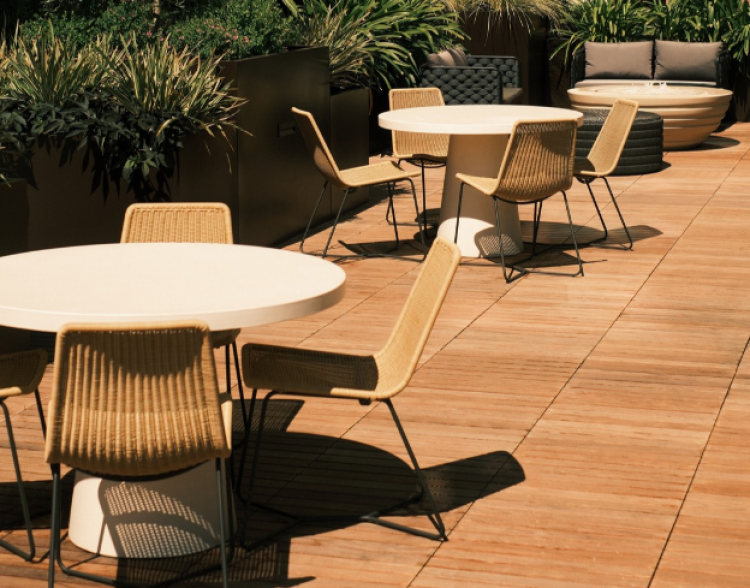
The most successful outdoor spaces are not static. They shift with the light, the temperature, the pace of the property, and the way people move through them.
A resort terrace feels different at breakfast than it does at sunset. A courtyard that offers quiet shade in the morning may become a gathering place in the evening. A pool deck that feels open and active during the day can become more intimate after dark. For designers and landscape architects, this creates an opportunity to think beyond how an outdoor space looks in a single moment.
Instead, the question becomes: how should the space feel throughout the day?
Designing for that kind of change requires more than furniture placement. It requires structure, atmosphere, material presence, and elements that can support different uses as the environment evolves. Planters, tables, seating, fire features, water features, and sculptural forms all play a role in helping outdoor spaces feel complete from morning to night.
Morning: Calm, Shade, and a Sense of Arrival
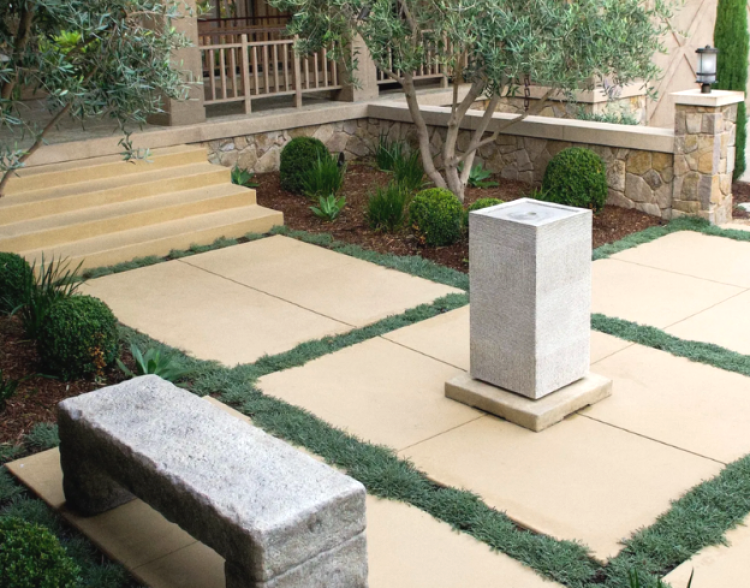
In the morning, outdoor spaces often serve as places of transition. Guests move from interiors to terraces, from lobbies to courtyards, or from private rooms to shared resort areas. The atmosphere should feel calm, clear, and grounded.
This is where greenery and material texture become especially important. Large-scale planters can frame an entry, soften architectural edges, and guide movement without making the space feel crowded. When planted with trees, grasses, or layered foliage, they bring shade, movement, and natural softness to spaces that might otherwise feel hard or exposed.
Water features also have a strong morning presence. The sound of moving water can create a sense of calm before a space becomes busy. In a courtyard, spa setting, or arrival area, water introduces a restorative quality that helps guests slow down and orient themselves.
Morning design is often about subtlety. The space does not need to be dramatic. It needs to feel intentional. Stone-like materials, refined forms, and restrained planting can create an environment that feels polished and welcoming before the day fully begins.
Midday: Function, Comfort, and Flow
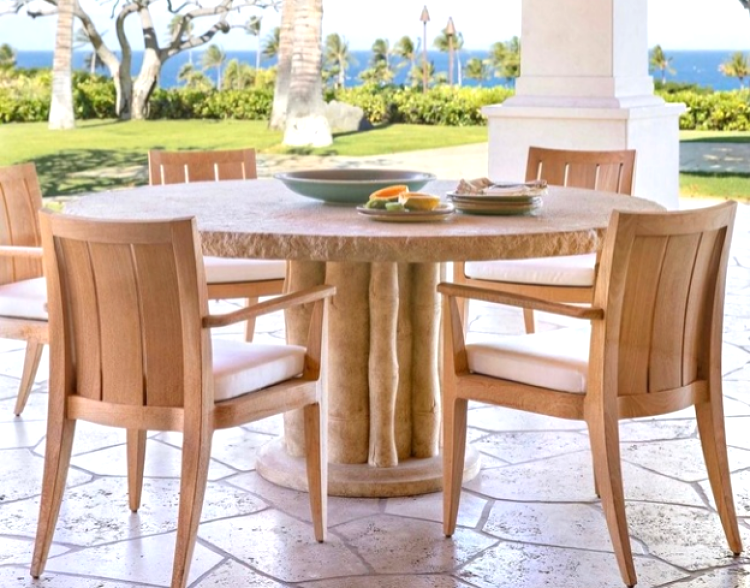
As the day becomes more active, outdoor spaces need to work harder. Restaurant patios fill, pool decks become social, terraces support dining or lounging, and courtyards may shift from quiet retreat to central gathering space.
This is when circulation and zoning matter. In hospitality settings, an outdoor space may need to support several experiences at once. Some guests may be dining, others may be waiting, gathering, working, or simply passing through. The layout should allow those uses to coexist comfortably.
Planters can help define those zones without building walls. A row of substantial planters can separate dining from circulation. A pair of vessels can mark a transition from one area to another. Larger pieces can create privacy around seating areas while still keeping the space open and connected.
Tables and seating also become central during this part of the day. They should feel integrated into the environment, not placed after the fact. Sculptural tables, benches, and side pieces can contribute to the visual rhythm of a terrace or courtyard while supporting the practical needs of guests.
In midday light, material choices become more visible. Surfaces are seen clearly. Texture, finish, proportion, and scale all matter. GFRC and Fiberstone pieces are well suited to these environments because they bring the look of natural stone with durability for indoor and outdoor use. Their presence helps outdoor spaces feel architectural, even when they are designed for everyday function.
Afternoon: Texture, Light, and Layering
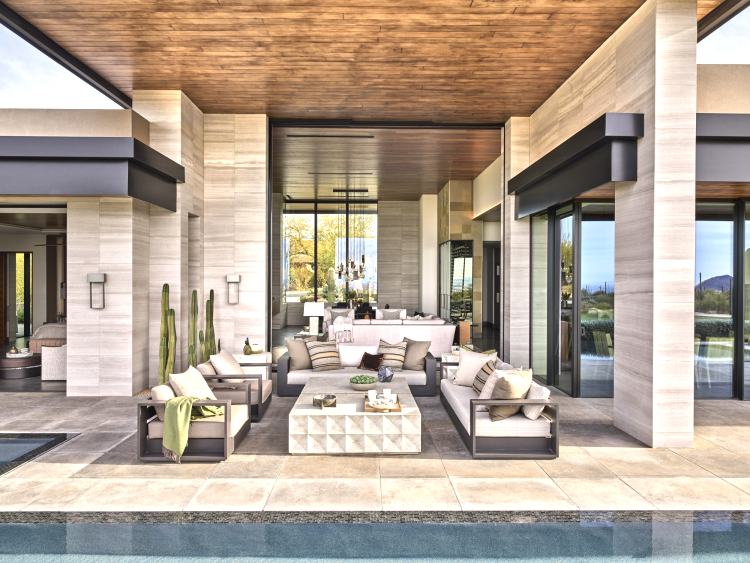
Afternoon often reveals whether an outdoor space has enough depth. As sunlight shifts, certain materials begin to show more texture. Shadows stretch. Plantings cast pattern and movement. Water reflects light. Sculptural forms become more dimensional.
This is where layered design becomes important. A space that relies only on furniture can feel flat. A space shaped by planters, water, fire, seating, tables, and architectural forms has more variation as the day changes.
For designers, this is an opportunity to think about how each element responds to light. A textured planter may catch sun along its edge. A water feature may create reflection and sound. A substantial table may anchor a seating area as the surrounding light becomes softer. These details are not always the first thing guests notice, but they influence how the space feels.
The goal is not to overfill the environment. It is to give the space enough material and sensory interest to remain engaging throughout the day.
Evening: Warmth, Glow, and Gathering
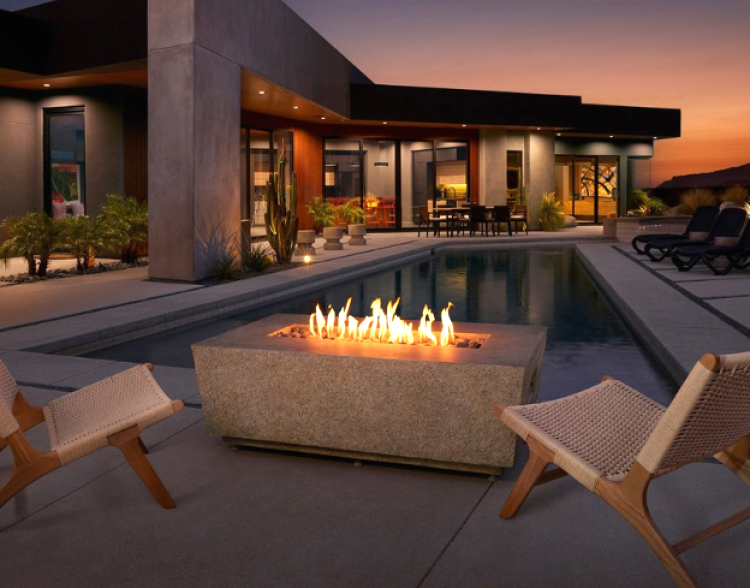
After sunset, outdoor spaces change again. Views soften. The atmosphere becomes more intimate. Guests are drawn to warmth, light, and places that feel comfortable enough to linger.
Fire features are especially powerful in this part of the day. They create a natural focal point and help transition a terrace, courtyard, or pool deck into an evening destination. More than a source of warmth, fire introduces movement and glow. It gives people a reason to gather and gives the space a sense of energy after dark.
Water features also take on a different role in the evening. With lighting, water becomes more reflective and atmospheric. The sound of movement can make a space feel more private, even in a busy hospitality environment.
Planters continue to provide structure after dark, especially when paired with thoughtful lighting. Their forms help define the space even when plantings recede into shadow. Tables and seating support the evening experience by giving guests a place to settle into the environment rather than simply pass through it.
The best evening spaces feel transformed, but not disconnected from the daytime design. They should feel like the same environment, seen in a different rhythm.
Designing for the Full Day
Outdoor spaces that change throughout the day require a balance of beauty and performance. They need pieces that can support function, withstand outdoor conditions, and maintain visual presence across changing light and use.
Stone Yard, Inc. creates GFRC and Fiberstone pieces for exactly these kinds of environments. Planters bring greenery and structure. Water features introduce calm and movement. Fire features create warmth and gathering. Tables, seating, and sculptural elements help shape outdoor rooms with lasting architectural presence.
For hospitality and luxury residential projects, the most memorable outdoor spaces are not designed for one photograph or one time of day. They are designed to evolve. They welcome guests in the morning, support activity throughout the day, and become more atmospheric as evening arrives.
That shift is what makes an outdoor space feel complete.